

In today’s fast-paced business environment, organizations are inundated with vast amounts of unstructured data. This data comes from various sources, including customer feedback, social media interactions, emails, chat conversations, and product reviews. The volume of this unstructured data can be overwhelming for businesses to manage, analyze, and leverage effectively without the right tools and strategies.
Natural Language Processing (NLP) technology has emerged as a powerful solution to process and analyze human language, enabling businesses to extract valuable insights from vast datasets. AI-backed solutions like NLP allow businesses to understand customer sentiment, automate customer service, and streamline their operations.
At Topranker, we specialize in providing AI-integrated technology that powers NLP solutions tailored to your specific business needs. Whether you’re looking to engage customers through intelligent chatbots, extract actionable insights from customer feedback, or automate data categorization, our NLP models are designed to help you unlock the full potential of your data. By leveraging the power of AI-powered intelligence systems, businesses can make smarter, data-driven decisions, improve customer experiences, and achieve growth.
The immense power of NLP lies in its ability to automate tasks that were once manually tedious and time-consuming. By implementing AI-enhanced solutions, businesses can process vast amounts of unstructured data, identify key trends, and automatically classify or categorize information with high accuracy.
Natural Language Processing (NLP) refers to a branch of Artificial Intelligence (AI) that enables machines to interpret, understand, and generate human language. While traditional machine learning models process structured data, such as numerical and categorical information, NLP focuses specifically on unstructured data, which includes text and speech.
AI-backed solutions powered by NLP utilize deep learning algorithms to analyze and understand the intricacies of human language, such as syntax, context, sentiment, and intent. These solutions can extract meaning from large volumes of text and speech, providing businesses with valuable insights that were previously difficult to access.
AI-integrated technology within NLP systems enables them to perform a variety of tasks, including text classification, sentiment analysis, named entity recognition, and even text generation. These capabilities make NLP a game-changer for businesses looking to automate processes, improve customer interactions, and make data-driven decisions.
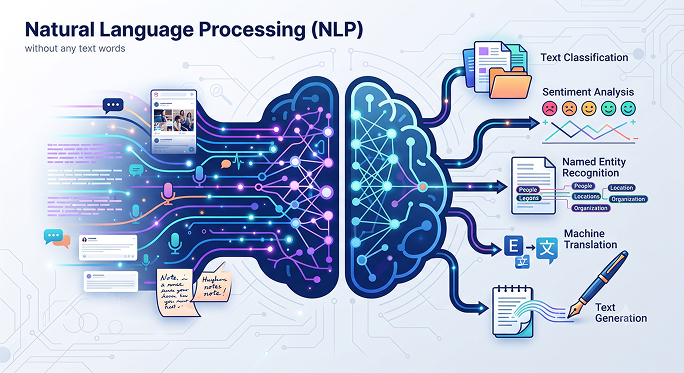

The first step in implementing AI-powered intelligence systems is gathering relevant data. This data can come from a variety of sources, including customer feedback, emails, social media posts, chat logs, and voice data. The more comprehensive the data source, the richer the insights that can be derived from the data.

Raw data is often noisy and contains irrelevant content. Preprocessing is necessary to clean and structure the data before it can be analyzed. This includes several tasks:
Tokenization: This process breaks down the text into smaller, analyzable pieces, such as words, phrases, or sentences.
Stop Word Removal: Common words such as “the,” “and,” and “is” are filtered out as they do not add much value for analysis.
Stemming and Lemmatization: These processes reduce words to their root forms. For example, “running” becomes “run.”
Named Entity Recognition (NER): This task involves identifying and categorizing key entities, such as people, organizations, or locations, in the text.

Once the data is preprocessed, machine learning models are trained to recognize patterns and relationships within the data. These models learn from the data and are able to make predictions or classify new data based on the patterns they have identified.

After training, the NLP model can analyze new data and perform various tasks. Some of these tasks include:
Sentiment Analysis: Determining whether a text is positive, negative, or neutral.
Text Classification: Categorizing text into predefined groups (e.g., classifying emails as urgent or non-urgent).
Named Entity Recognition (NER): Identifying important entities such as names, locations, and dates in the text.

The ultimate goal of AI-enhanced solutions is to transform raw data into actionable insights that businesses can use to improve decision-making, enhance customer experiences, and drive growth.
The rapid growth of unstructured data has created a significant challenge for businesses. To remain competitive, businesses must adopt AI-integrated technology to unlock the value hidden within this data. Here are several key reasons why AI-powered intelligence systems are essential for businesses today:
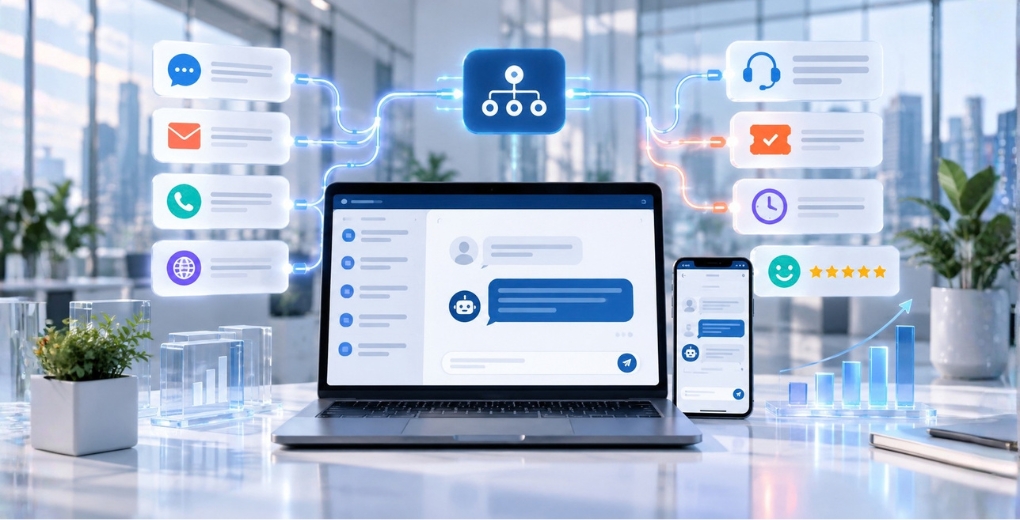
Customer service is one of the most critical functions in any business. With AI-backed solutions, businesses can automate interactions with customers through intelligent chatbots. These chatbots are capable of handling a wide range of customer inquiries simultaneously, offering personalized responses, and resolving simple issues quickly and efficiently.
At Topranker, our NLP solutions help businesses create intelligent chatbots that can provide 24/7 customer support, leading to faster response times and improved customer satisfaction.

Sentiment analysis is one of the most powerful applications of NLP. By analyzing customer feedback, product reviews, and social media posts, businesses can gauge public opinion and customer sentiment in real-time. AI-powered intelligence systems can classify text as positive, negative, or neutral, allowing businesses to make data-driven decisions and adjust their strategies accordingly.
Topranker’s sentiment analysis tools enable businesses to understand customer sentiment and adjust their marketing, customer service, and product strategies in real-time.
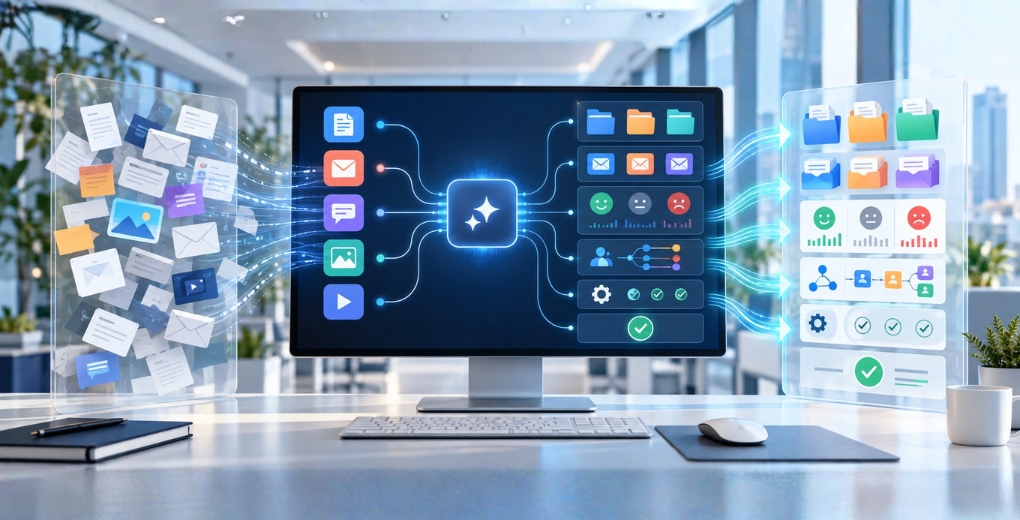
AI-enhanced solutions can automate many repetitive tasks, such as categorizing content, sorting emails, and analyzing customer sentiment. By automating these tasks, businesses can significantly improve operational efficiency, save time, and reduce human error.
Topranker’s NLP solutions allow businesses to handle large volumes of data quickly and accurately, enabling employees to focus on more strategic tasks.

AI-backed solutions enable businesses to gain valuable insights from unstructured data sources, such as customer feedback and social media posts. By analyzing this data, businesses can identify trends, track customer sentiment, and make informed decisions that drive growth.
Topranker’s NLP solutions help businesses make data-driven decisions by extracting valuable insights from customer interactions, social media, and other unstructured data sources.

One of the key advantages of AI-integrated technology within NLP solutions is their ability to scale easily as your business grows. By automating routine tasks, NLP solutions reduce the need for additional labor resources, leading to significant cost savings. Additionally, NLP solutions can handle increasing volumes of data as your business expands, without compromising performance.
Topranker’s NLP solutions are designed to grow with your business, providing scalable solutions that improve efficiency and reduce costs.
At Topranker, we offer customized NLP solutions that are tailored to meet your business’s specific needs. Whether you need to automate customer service, analyze customer feedback, or gain actionable insights from unstructured data, our NLP models are designed to deliver maximum value.

Tailored NLP Models:
We design bespoke NLP solutions that align with your specific business goals and objectives. Whether you require sentiment analysis, text classification, or chatbot development, our solutions are customized to your needs.

Seamless Integration:
Topranker’s NLP technology integrates seamlessly with your existing CRM, ERP, or support platforms, ensuring maximum operational efficiency and minimal disruption.

Scalable Solutions:
As your business grows, so does the volume of your data. Our NLP solutions are scalable and capable of handling larger datasets without compromising performance.

Continuous Monitoring and Optimization:
We offer ongoing monitoring and optimization of your NLP solutions, ensuring that they evolve with your business needs and remain effective over time.

Topranker’s NLP solutions are transforming healthcare by automating the extraction of information from patient records and clinical data. These solutions allow healthcare providers to make faster diagnoses, improve patient care, and predict health outcomes.
Automated Data Extraction: NLP technology extracts and processes medical data, ensuring healthcare providers have accurate, up-to-date information.
Predictive Healthcare: NLP models can analyze patient data and predict health risks, enabling early intervention and better patient outcomes.

In the financial sector, NLP technology helps businesses analyze market sentiment, customer interactions, and financial news. This enables businesses to make more informed investment decisions and detect fraudulent activity.
Market Sentiment Analysis: NLP models assess market sentiment and customer feedback, providing real-time insights into market trends.
Fraud Detection: AI-powered intelligence systems detect fraudulent activity by analyzing transaction data and identifying suspicious patterns in communication.

NLP solutions help retailers analyze customer sentiment, track feedback, and offer personalized recommendations. This results in higher customer satisfaction and increased sales.
Customer Feedback Analysis: NLP models identify trends in customer feedback, guiding product improvement and enhancing the customer experience.
Personalized Recommendations: NLP-driven systems offer personalized product recommendations based on customer preferences, boosting sales and customer loyalty.

NLP solutions can automate customer support by providing instant responses to common inquiries. This reduces wait times and enhances customer satisfaction.
Automated Customer Support: NLP-powered chatbots provide quick, personalized responses to customer inquiries, improving response times and efficiency.
Speech-to-Text: AI-enhanced solutions: transcribe customer calls, enabling businesses to analyze customer interactions and improve service quality.
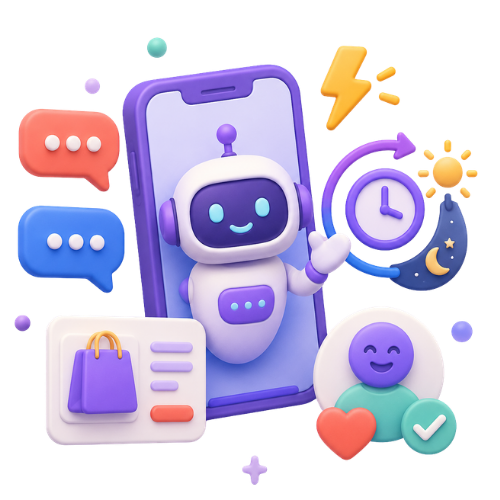
NLP (Natural Language Processing) solutions are AI-powered tools that enable businesses to process and analyze unstructured data, such as text, speech, and customer interactions. By using NLP, businesses can automate critical functions, such as sentiment analysis, text categorization, and language translation, transforming raw data into meaningful insights. The primary benefits of NLP include:
Ultimately, AI-enhanced NLP solutions help businesses make smarter, data-driven decisions by extracting valuable insights from vast amounts of unstructured data, driving growth and improving operational efficiency.
NLP technology significantly enhances customer service by automating responses and providing better insights into customer needs. Here’s how NLP impacts customer service:
Through AI-backed NLP solutions, businesses can provide faster, more efficient, and personalized customer service, increasing satisfaction and loyalty.
Almost every industry can benefit from AI-backed NLP solutions, especially those that handle large volumes of unstructured data. The following industries stand to gain the most:
With AI-integrated technology, NLP solutions empower businesses to automate and optimize their operations, leading to increased productivity and customer satisfaction.
NLP has a wide range of use cases in business. Some of the most common include:
These use cases are powered by AI-backed NLP solutions that automate and optimize processes across various business functions.
The cost of implementing NLP solutions depends on several factors, including the complexity of the solution, the scale of the project, and the level of customization required. Key cost elements include:
Topranker provides scalable pricing based on your business needs, offering AI-powered intelligence systems that deliver high ROI by automating processes, improving decision-making, and enhancing customer satisfaction.
A company should consider implementing NLP solutions when:
If your business faces any of these challenges, implementing AI-backed solutions can unlock the potential of NLP to streamline operations and drive growth.
NLP is a specialized branch of machine learning that focuses on the interpretation of human language. While traditional machine learning works primarily with structured data (like numbers or categories), NLP processes and analyzes unstructured data, such as text, speech, and conversation.
NLP requires specialized algorithms, such as tokenization, part-of-speech tagging, and named entity recognition, which are different from those used in traditional machine learning.
The industries that benefit the most from NLP solutions are:
AI-backed solutions using NLP allow businesses in these industries to optimize their workflows, enhance decision-making, and improve customer service.
Topranker’s NLP solutions stand out due to:
With AI-enhanced solutions, Topranker delivers scalable and high-performance NLP systems that empower businesses to harness the full potential of their data.
NLP solutions are ideal for businesses in sectors where customer interactions, large volumes of text data, or customer feedback play a significant role. Some of the best-suited businesses for NLP implementation include:
With AI-backed NLP solutions, businesses can automate processes, improve decision-making, and provide better customer experiences.
NLP improves the accuracy of data analysis by extracting structured insights from vast amounts of unstructured text data. Through AI-powered intelligence systems, NLP models can identify patterns, detect sentiments, and classify data with high precision. These capabilities allow businesses to:
NLP provides businesses with a more accurate, efficient way of analyzing vast amounts of text-based data, driving better decisions and improving operational efficiency.
While AI-enhanced solutions provide significant benefits, businesses should be aware of potential challenges:
It’s important for businesses to continuously monitor and optimize their NLP models to ensure they remain effective as their needs evolve.
Mobile : +1(510)708-6964
E-mail : info@topranker.in
Mobile : +31-614 109 171
E-mail : info@topranker.in
Mobile : +61-402 145 417
E-mail : info@topranker.in